
Between Drawing, Painting, Everyday Life and Absurdity
Artist Klaus Harth works across drawing, painting, graphic art and performance. His work repeatedly explores perception, the interplay of signs and forms, and the question of how an idea becomes an image. Harth’s work challenges the viewer. Rather than offering easy answers, it invites us to look more closely.
What drives Klaus Harth? Where do his subjects and ideas for images come from? And what does it mean to work as an artist in Saarland while looking beyond the region’s borders? We discuss these questions with the artist on art talk, the arts podcast for the SaarLorLux region.
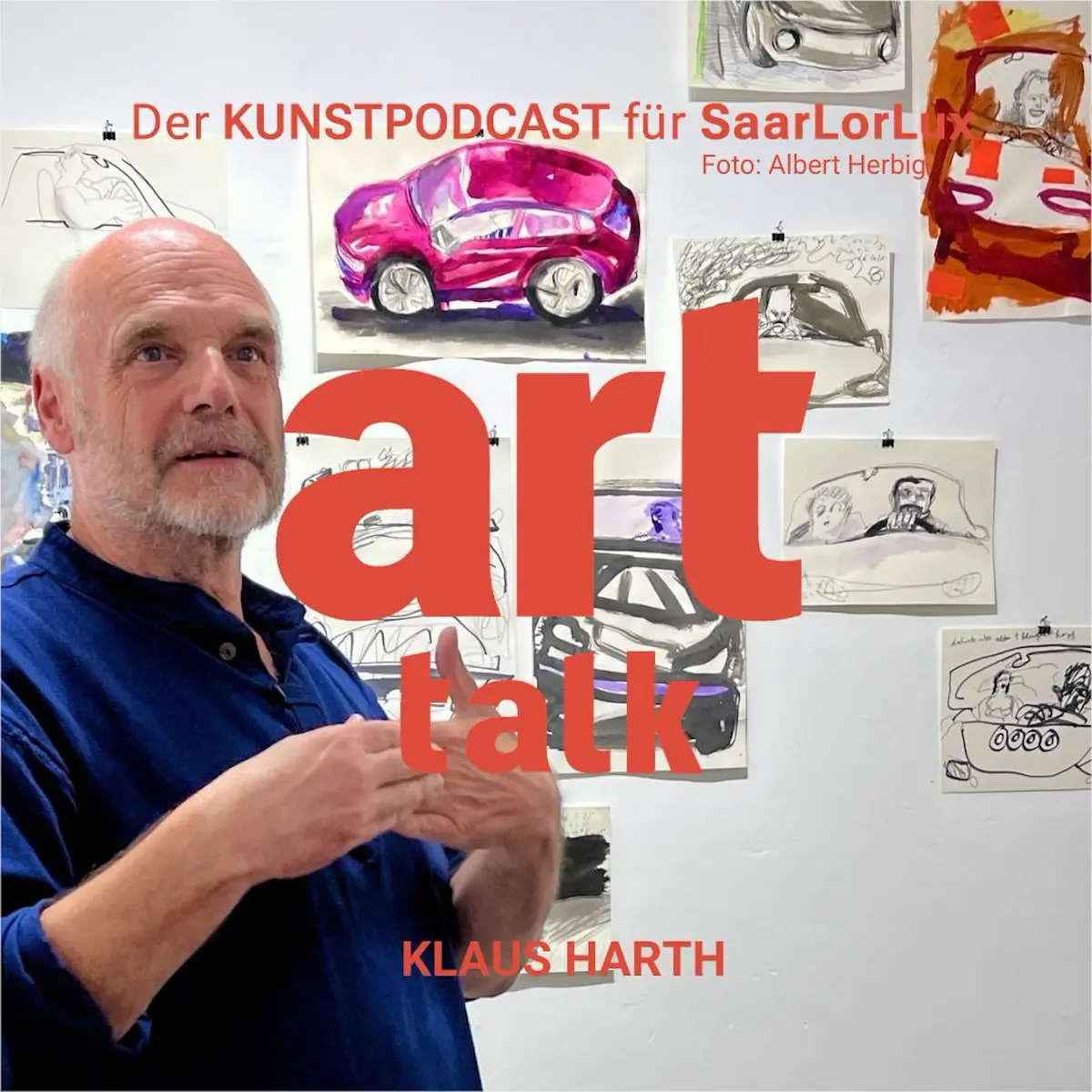
We met Klaus Harth during his exhibition “Menschen ohne Parkplatz” (“People without a Parking Space”) at Galerie [SALI E TABACCHI].
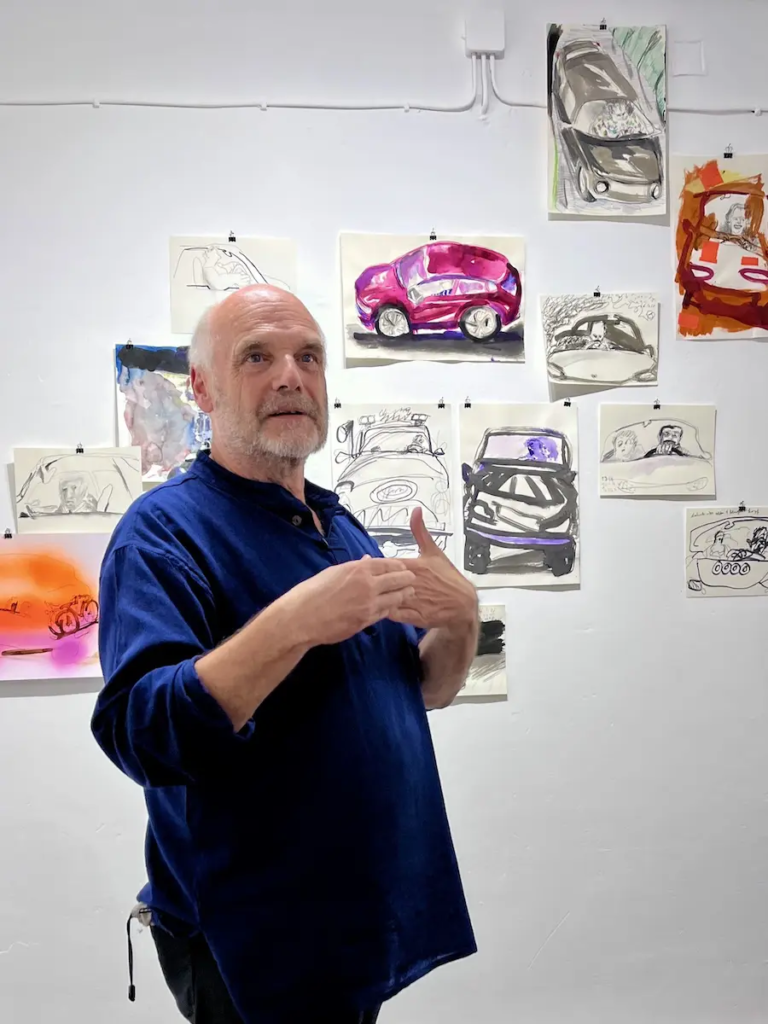
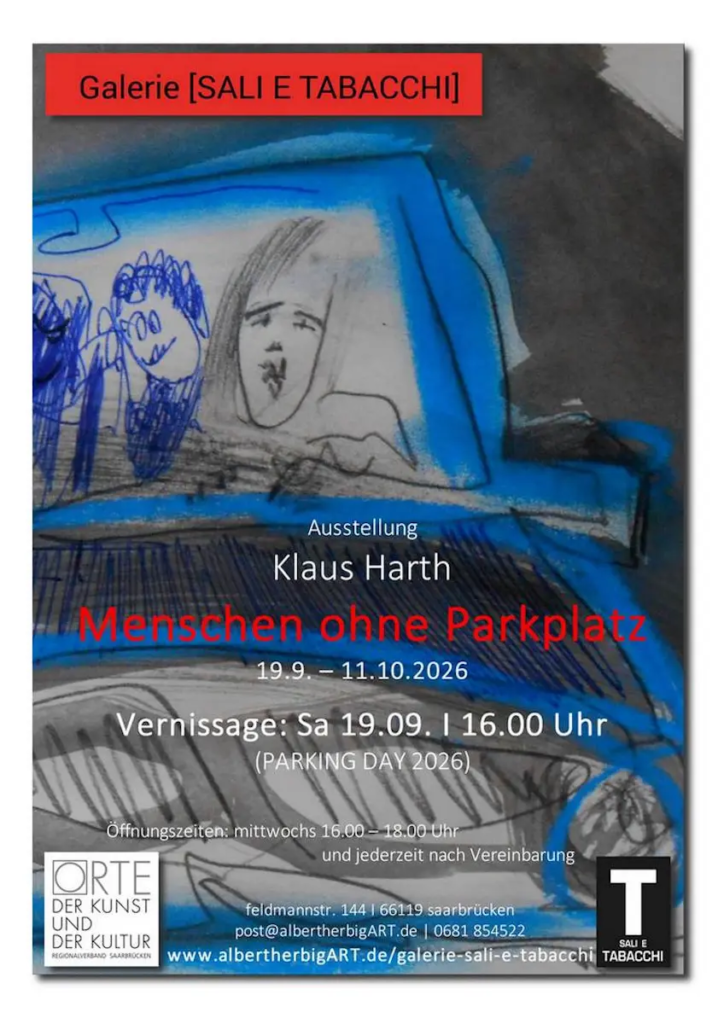
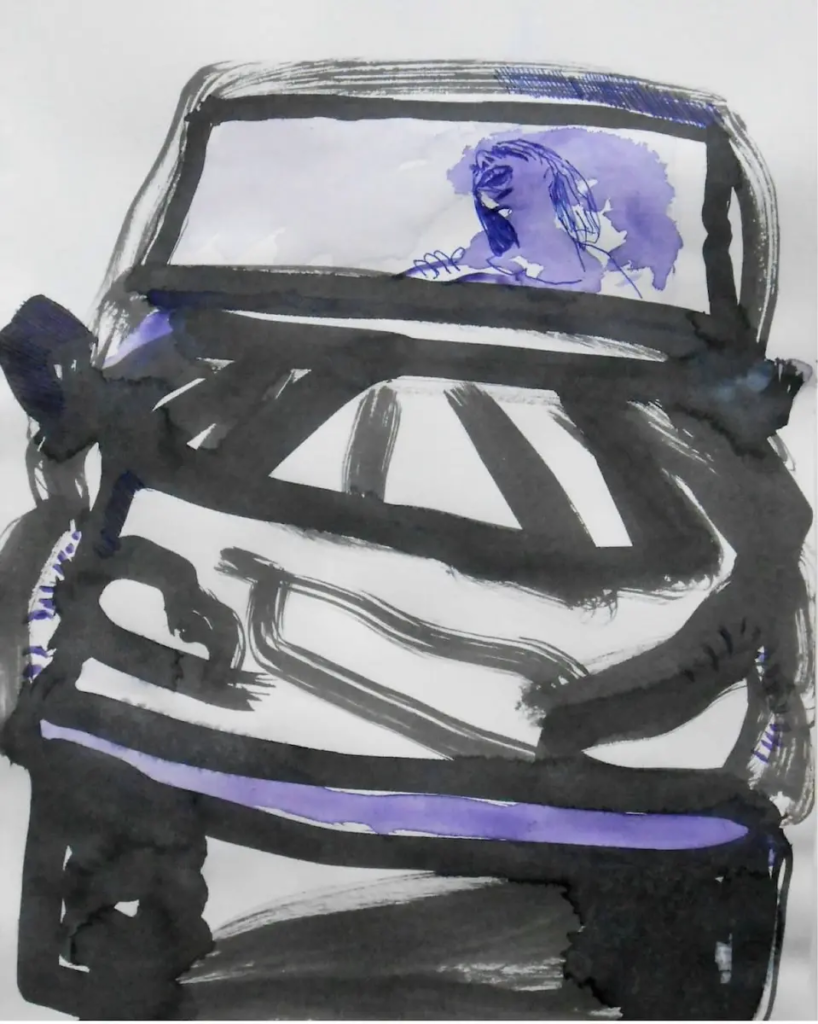
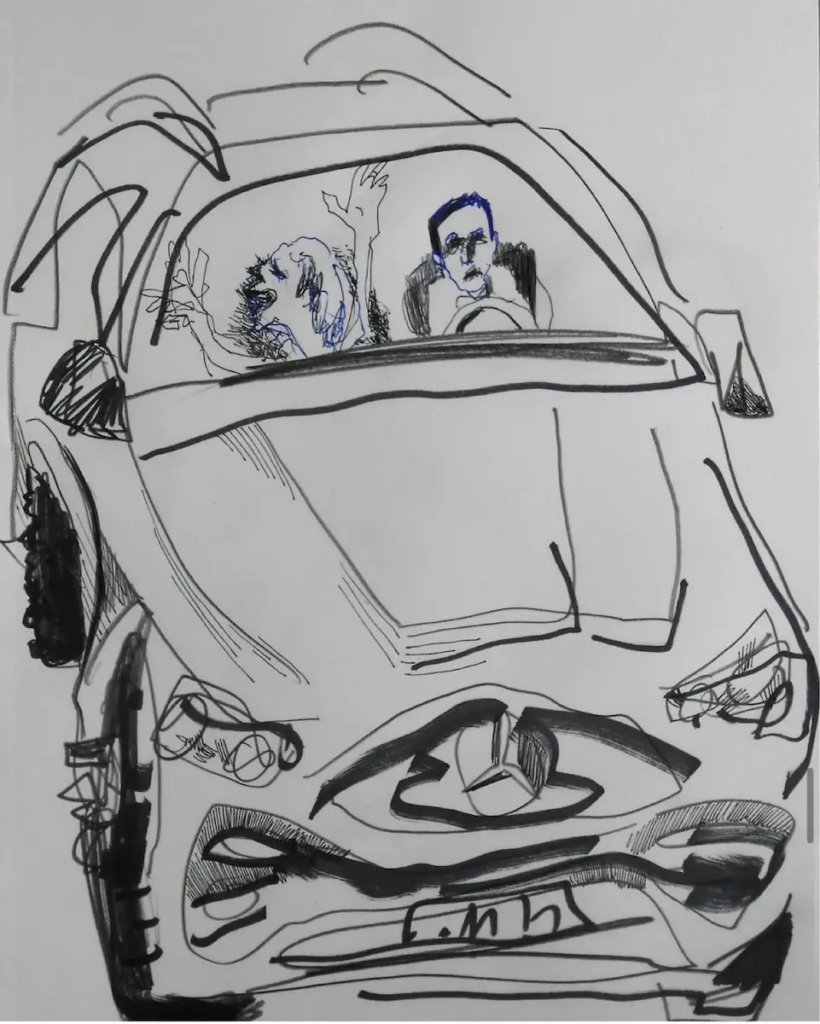
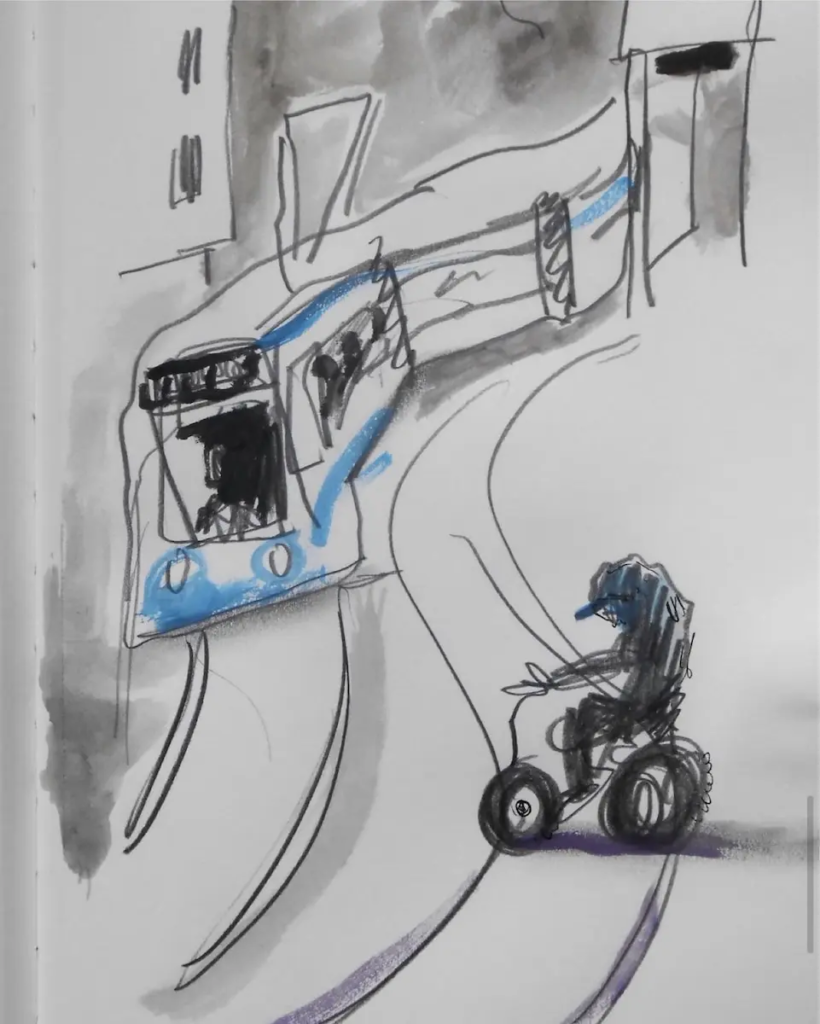
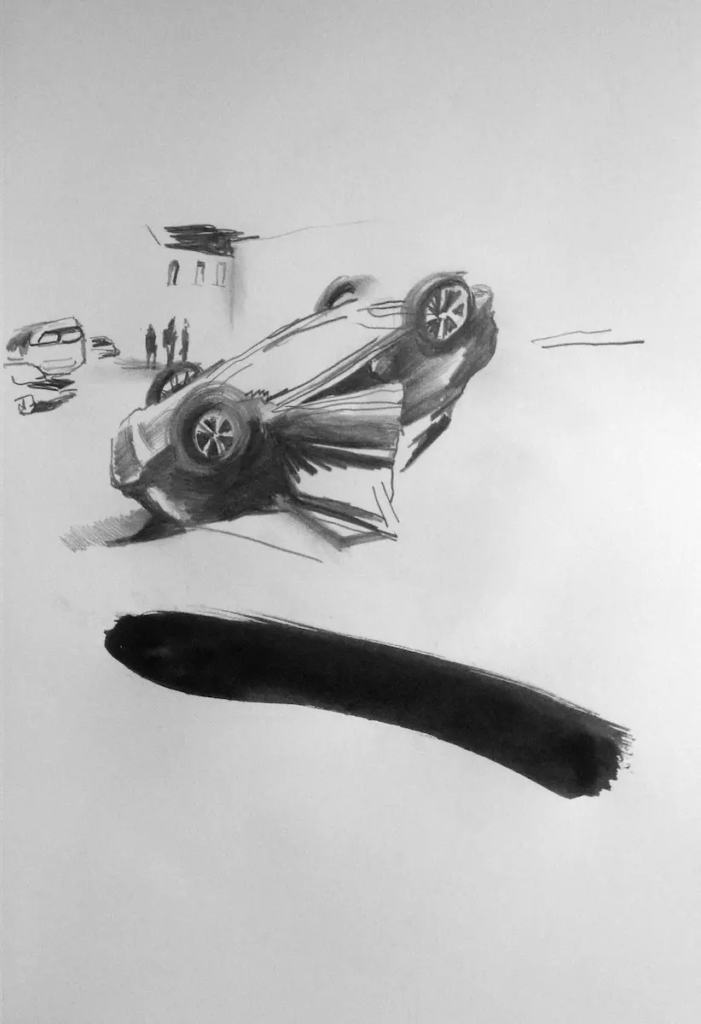
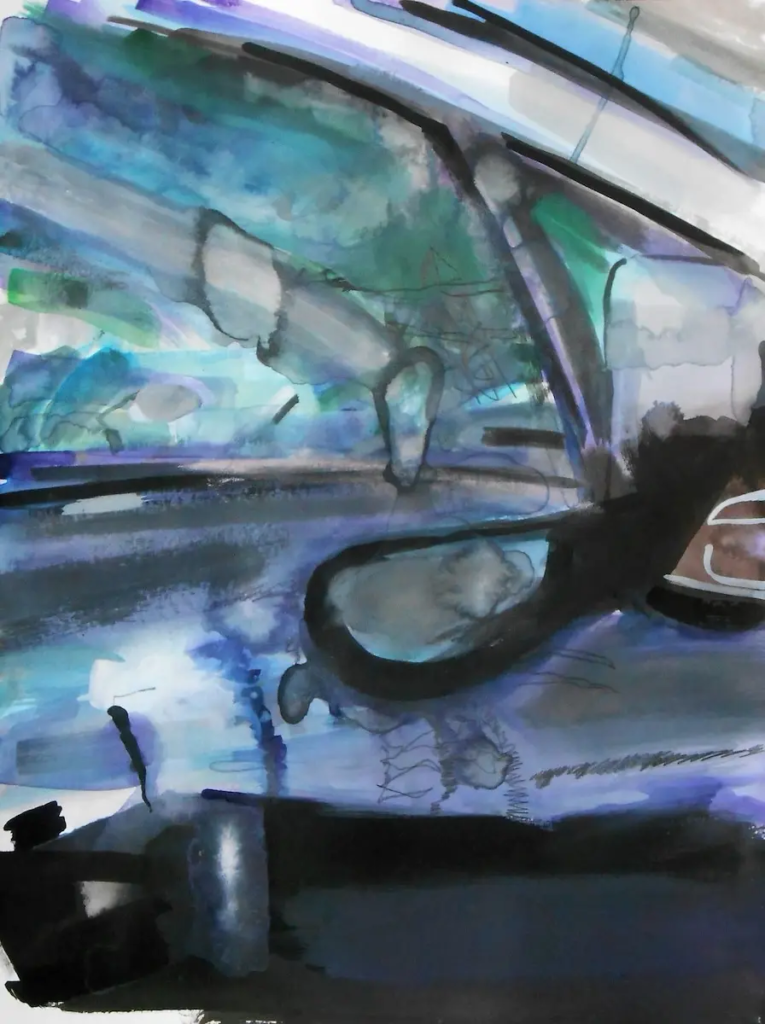
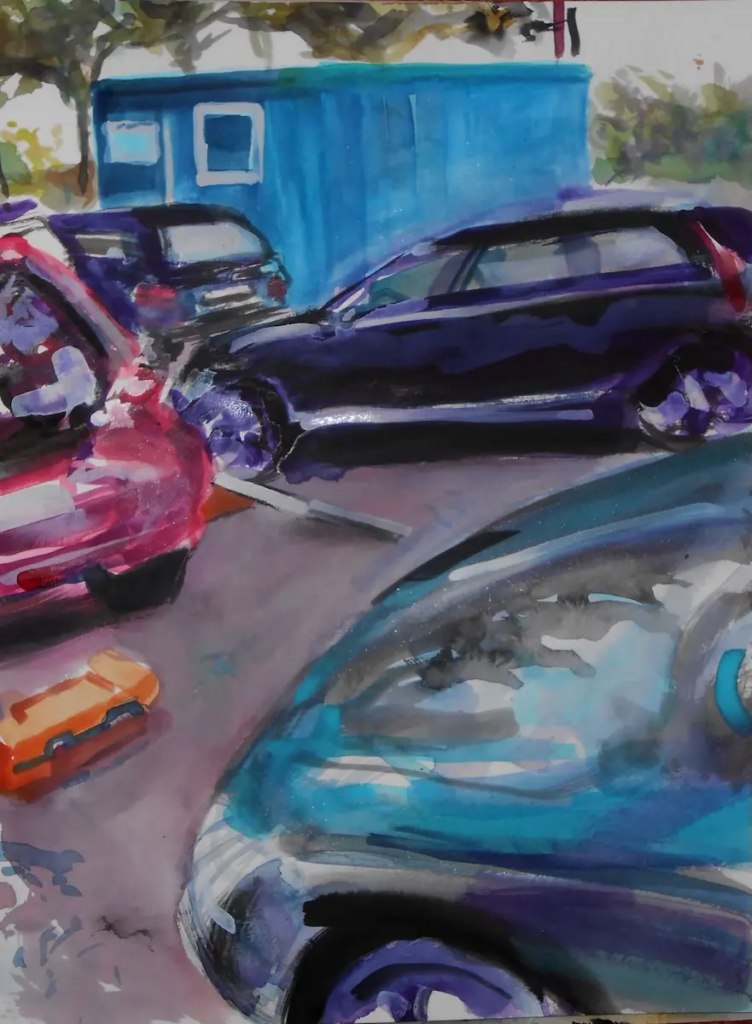
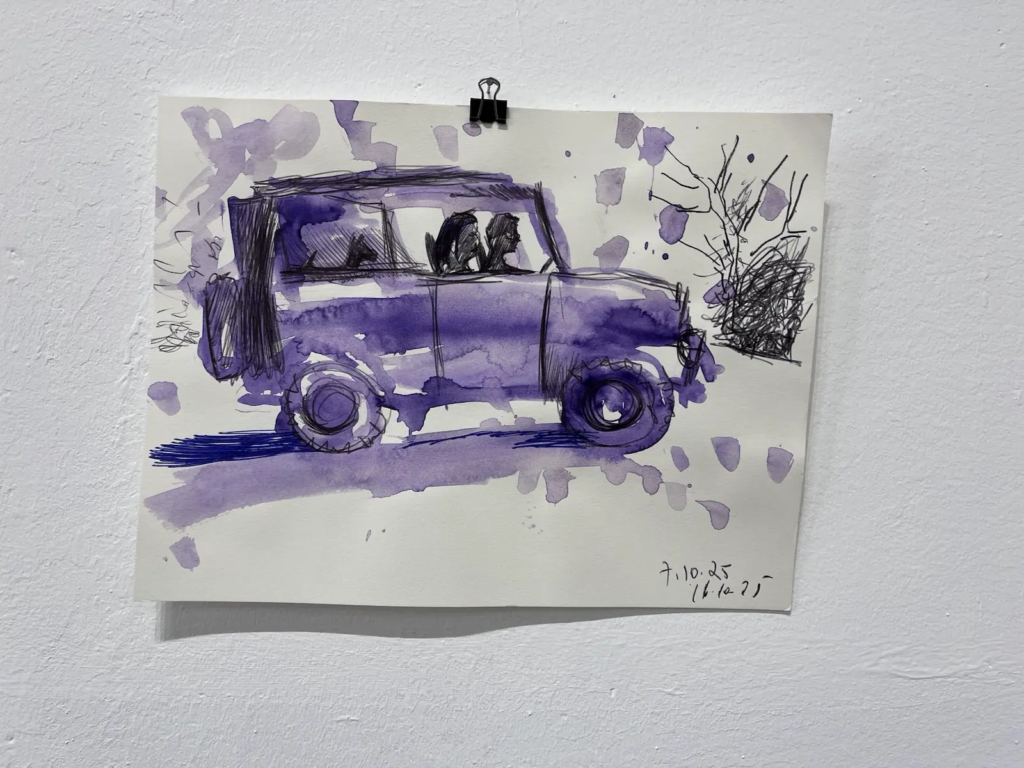
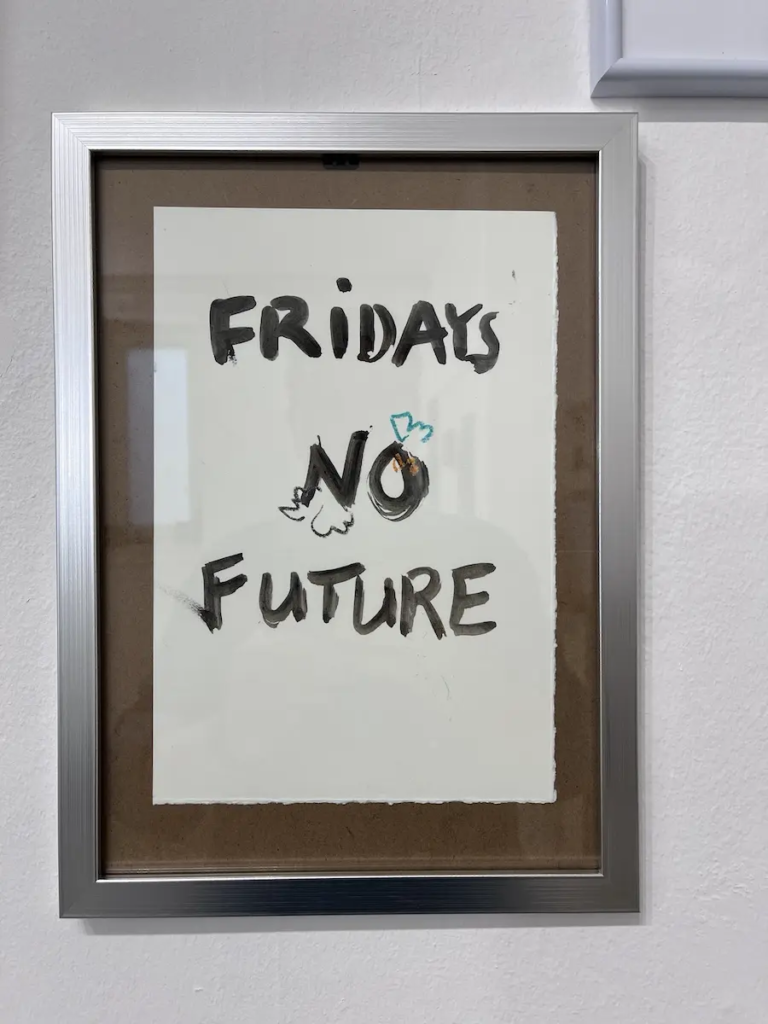
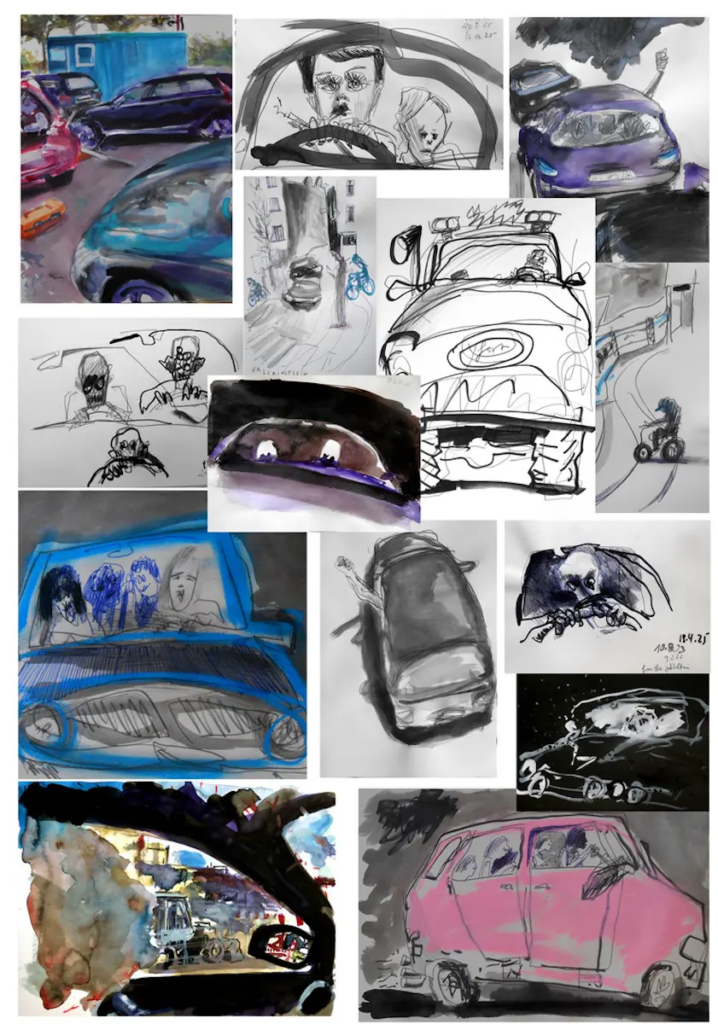
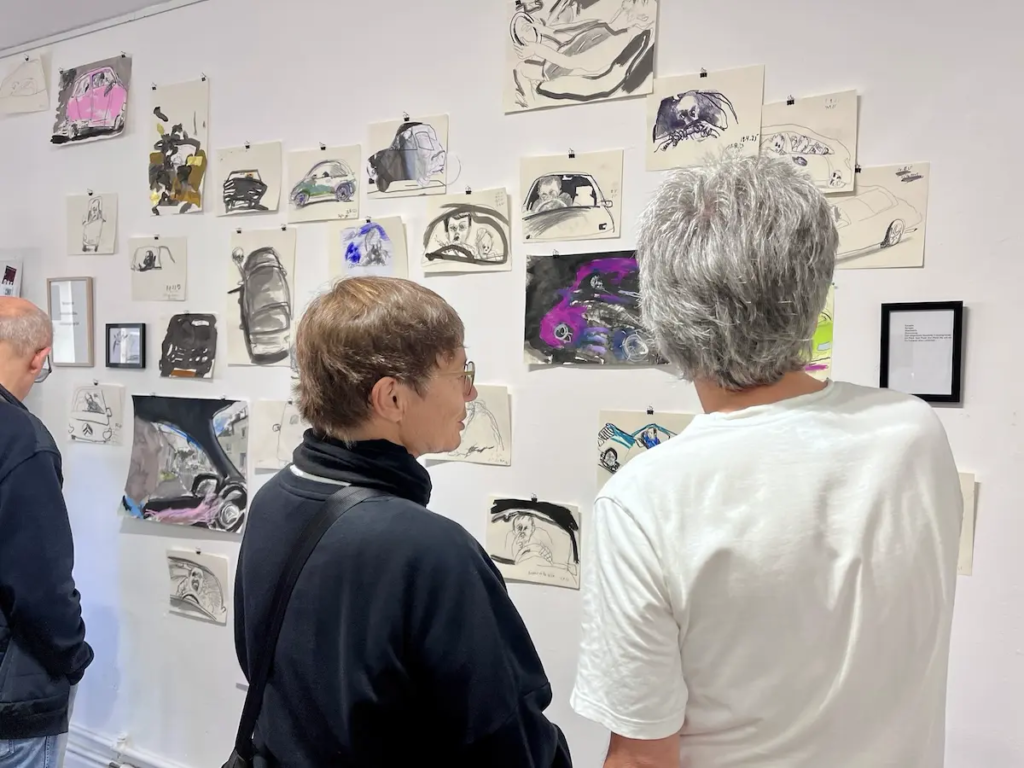
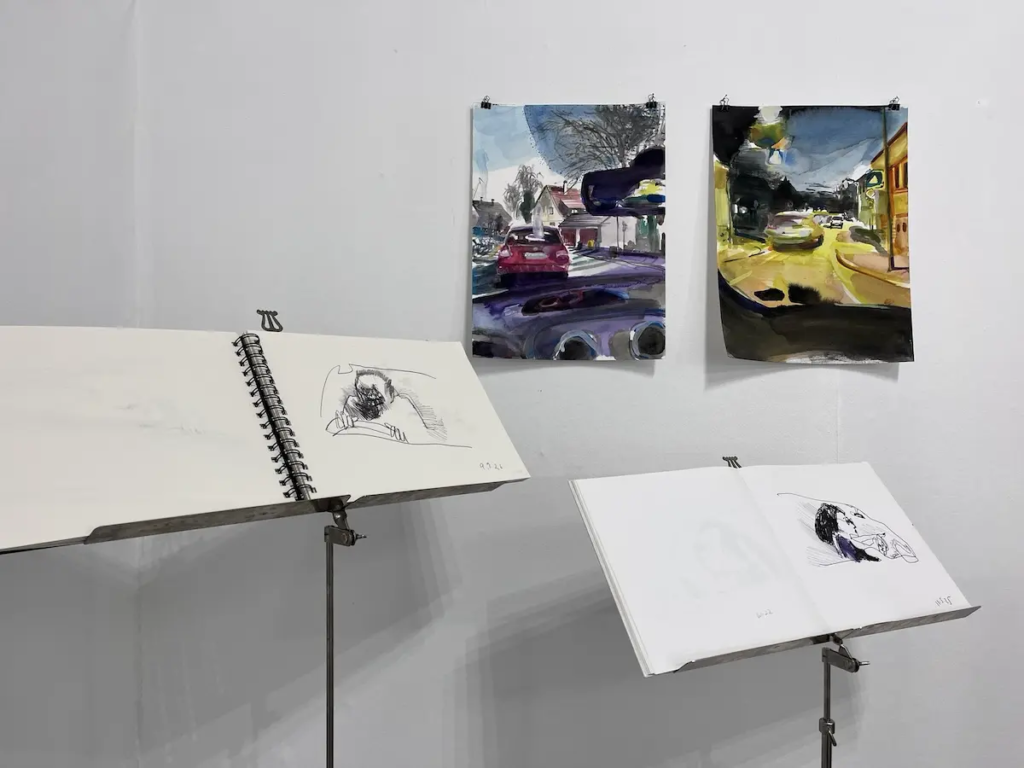
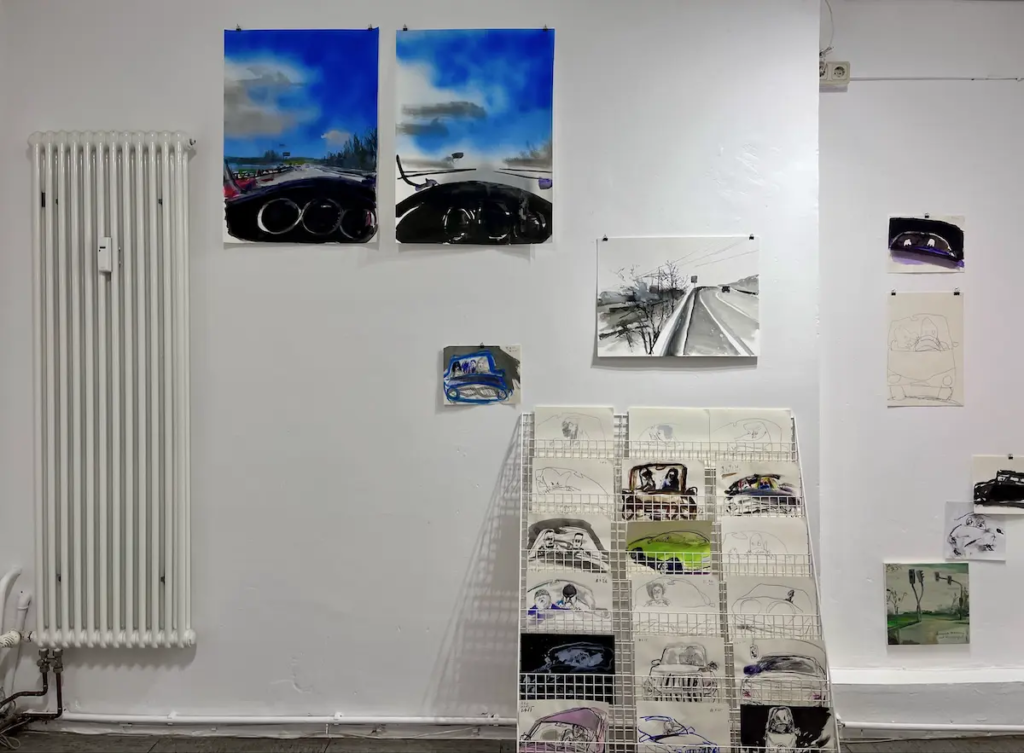
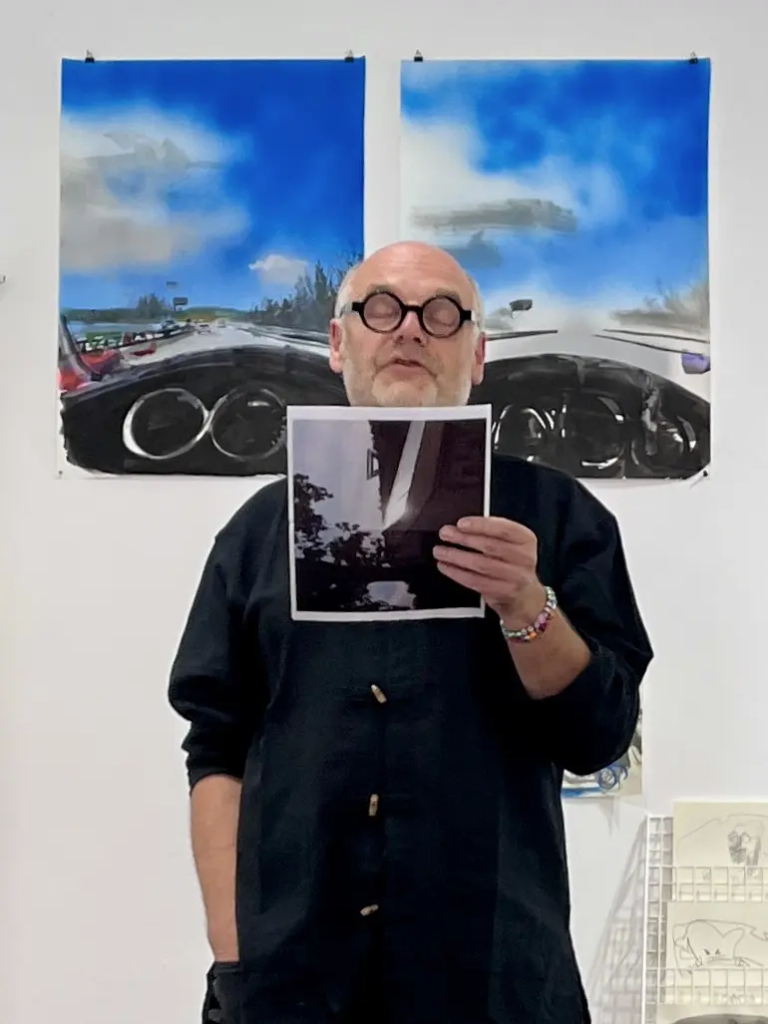
Photo Credits:
– 1,2,9,10,11,12,13,14,15: Albert Herbig
– 3,4,5,6,7,8,16,17,18,19: Klaus Harth
How to enable subtitles in your language
The video features the original audio, so we have provided subtitles for you.
- If no subtitles appear, move your cursor over the video player on a computer or tap the video on a mobile device.
- Click the square icon to the left of the gear icon to turn subtitles on or off.
- The subtitle language will normally follow your browser’s language settings automatically.
- If it does not, click the gear icon to the left of the YouTube logo to choose your language.
Read the full art talk interview with Klaus Harth here
Introduction to the episode
Verena Feldbausch: We talk about art on art talk, the art podcast from SaarLorLux. We meet curators and artists right where they’re currently exhibiting. Join us to discover contemporary art and extraordinary art spaces in our region. Join us for gallery talks, exhibition openings and closing events. You can listen to art talk wherever you get your podcasts.
Hello and a warm welcome to art talk SaarLorLux. Klaus Harth works across drawing, painting, graphic art and performance. Again and again, his work explores perception, plays with signs and forms, and asks how an idea becomes an image. What drives Klaus Harth? Where do his subjects and ideas for images come from? And what does it mean to work as an artist in Saarland while also looking beyond the region’s borders? That’s what we’re talking about today on art talk SaarLorLux. My name is Verena Feldbausch, lovely to have you with us.
Welcome and the exhibition title
Hello and a warm welcome, Klaus Harth. “People without a Parking Space” is the title of your exhibition here at Galerie Sali E Tabacci in Saarbrücken. What’s behind that title?
Klaus Harth: People without a Parking Space, exactly. For me, it’s mainly about the people you see in these drawings.
The starting point was this thing that’s always fascinated me — Picasso did a series of drawings of people in chairs, armchairs, chairs. And I always found them so — well, Stravinsky, you know that one — I always found them so fascinating, because somehow the figure and the chair are one thing. They’re trapped in there, how they move around in there, how they’re stuck in there. And I always found that very fascinating.
And of course I myself move within this society, on foot, by bike, by car — by car too. And I see other people sitting in their cars, and suddenly I thought: hang on, that’s the chair of our time. That’s really it: the way people sit in their cars, the way they move, it tells us something about our society.
When I’m driving — or actually, more when I’m walking and watching the traffic — I think, what absolute nonsense. But anyway, when you’re in a car yourself, you don’t really notice it. But the traffic itself is only part of it. The other thing is how people move through the world in their vehicles, whether they look grim or relaxed — you see all sorts.
And in that respect, it’s not social criticism. But it’s a way of creating a setting in which to stage the figures. A setting for them within the drawing, I mean. That was more or less what it was about.
The car as a place of observation
Verena Feldbausch: The works in your exhibition feel like very precise snapshots. People in cars, behind the windows, at the wheel. They wait, they shout, and so on and so forth. Is a car a particularly good place for you to observe people?
Klaus Harth: It’s a good place. So as I just said, they are trapped. Sometimes there are several people in a car, but often they’re on their own. But they’re all inside this space. So it’s a setting where something can happen. And that makes the drawings comparable. That’s what’s interesting: being able to compare them.
Working process and planning
Verena Feldbausch: Your drawings often look spontaneous and light. Yet there’s also very precise observation behind them. How much planning goes into a work that seems so spontaneous? And how do you get from the sketch to the finished work?
Klaus Harth: This series really does grow out of spontaneous observations. People I see in the rear-view mirror, people waiting at the traffic lights. Some drawings come from being out on foot, standing at the traffic lights. Then I see four people in a car and think: right, great.
And then I always try – this runs through the whole series – I always try to remember them. It’s not as though I can sit there and draw them — they’ll drive off straight away. I don’t get a chance to draw their portraits, as such. Instead, I try to remember them. And that’s interesting too: how closely am I actually looking?
That person was interesting, they looked cool. Then I pick up my pen. Hang on — what did they look like? And you realise how often you haven’t really looked closely at all. It trains you to look more carefully, too. What is it that makes this particular head distinctive? That’s what I try to do. I don’t always have my sketchbook with me. Sometimes I have to wait until I get home and reconstruct it from memory.
Verena Feldbausch: But you don’t take photos, for example?
Klaus Harth: I don’t take photos, not in this series. With the pictures hanging between them, though, the ones called “Gegend”, I work from photographs. Those are always based on photographs. But the others come from entirely spontaneous observations. Then — you can see it from the dates — I keep reworking them.
That’s the interesting thing, because I was really unhappy with the first drawings. This isn’t going anywhere. Then I was in a situation where I often had to sit and wait somewhere, and I had these sketchbooks with me. So I just added a line here and there and looked at what happened. And suddenly it was there. Suddenly the precision was there. That runs through the whole series: going back and reworking things, adding another dot, trying to get it just right somehow.
Verena Feldbausch: Exactly. And I also wanted to ask how you get from the sketch to the finished work. So you make a sketch, then keep reworking it, until at some point you say: OK, now it’s finished.
Klaus Harth: Exactly.
Painting and drawing
Verena Feldbausch: You work with ballpoint pens, felt-tip pens, watercolour and spray paint. Whatever happens to be to hand, really. How do you distinguish painting from drawing?
Klaus Harth: I used to say that drawing was direct observation: something that goes straight onto the paper, spontaneously. Painting didn’t interest me for ages either. I found painting rather uninteresting. For a long time, even when I was studying — I studied drawing, actually, and got my degree in it — I only started painting again after my studies.
Painting always seemed like making some grand statement, and I thought that was daft. Drawing was about little observations, things you notice when you’re out and about, and what you develop from them. And then painting started to interest me, as a way of gathering experience and time.
When I start painting, I begin a picture — whereas with a drawing, once I’ve done it, it’s finished. That doesn’t quite apply here, of course, because I kept working on these drawings. But with painting, generally, I start something, I get older, I come back to it two days later, and after those two days I’m already someone else. I carry on painting as someone else, until eventually the painting is finished. That’s what suddenly interested me about painting. That’s generally where I’d draw the distinction. But as I said, it only partly applies to this series of drawings.
Working in series
Verena Feldbausch: Working in series is a thread running through your work. You drew robins for years, for example.
Klaus Harth: Painted them. In that sense, yes.
Verena Feldbausch: You painted them, OK. There are now 1,610 bird pictures, is that right? What can’t a single drawing achieve? Or to put it another way, what does a series make possible?
Klaus Harth: For me, a series is always a kind of experimental set-up, if you like. There’s a particular question that interests me. With the bird pictures, for example, the question was: can I paint? That started in 1997. It was really my first attempt at painting after my studies. What can I paint?
And because I’d always seen painting as making a grand statement, I thought: well, what’s the daftest thing you can think of? A picture of a bird. I’d used it before in an exhibition catalogue for the Künstlerhaus, as a photograph, though, because I wanted something everyday in that catalogue. The bird picture was in the Saarbrücker Zeitung, and I cut it out. So I thought: OK, that’s my subject. What can I do with it? Can I seriously bring myself to paint birds? Does it work? Do I allow myself to do that?
And it kept going. At first I wanted to paint a hundred identical pictures, which I couldn’t manage technically, or by temperament either. So I ended up with 35 very different ones to begin with. Then all sorts of people came to my flat and saw them. Even people who had nothing to do with art — everyone responded somehow. Oh, that’s interesting. And then there were more. So this experimental set-up grew.
Eventually there were a hundred pictures, and then the first exhibitions. And I became more and more interested in how long you can keep doing it without getting bored yourself, without repeating yourself. That’s always the question with a series: when does it tip over? At first you have that impulse — you’re pursuing an idea, a question — and you haven’t quite mastered the form yet, you’re not quite in control of it.
Then there’s that classic phase when form and content come together, when you’re in the flow and it all just rolls along. Then comes the phase when you get completely carried away with the form, and the content starts to slip away. Then you’re just repeating yourself. You have to watch out for that. You have to stop. Or keep going like some do.
Verena Feldbausch: So that would be the end?
Klaus Harth: That would be the end of the series, basically. A series ends when I realise: bang, the energy’s gone. With “People without a Parking Space”, the energy’s gone for now. I drive or walk through the city and see people in cars, but the spark’s gone when I think: I’ve done that one already. It’s repeating itself.
Just now I saw someone in front of me with really interesting ears, a young person in a car waiting at the lights. But I didn’t feel the urge to draw them. There are already ones like that in the series. It’s done for now, though it could flare up again. I don’t know.
Verena Feldbausch: And the robins — is that series finished?
Klaus Harth: It was finished in 2018. And then I said, okay, that was it. Then two years ago there was the exhibition for the Künstlerhaus’s fortieth anniversary. And I wanted to take part. What could I do for it? I thought it might be interesting to dig that series out again. See whether it would work again. Whether I could bring the series back to life after all that time. And whether it would challenge me again, whether I could do it.
I started the first one, and straight away I found it really exciting again. Then I started — I don’t even remember where I’d stopped — at 1.513, or something like that. So I ended up doing nearly another hundred. But things have gone quiet again now. At the moment, I don’t know. Maybe it was just a lingering glow.
Verena Feldbausch: OK, and that could happen with the cars too, with “People without a Parking Space”.
Klaus Harth: Could happen. I was still thinking about it the other day. It would be interesting. Maybe that’s precisely the point where it gets interesting to dig deeper. Maybe that’s when it really gets punchy, when you get to the heart of what it’s about. Once you’ve drawn your way through all this, you say: now we’re getting down to the nitty-gritty. That’s the phrase I was looking for. Maybe that’s when you get down to the nitty-gritty.
Humour in the works
Verena Feldbausch: Your drawings are quirky and grotesque, just like the everyday business of getting around by car, which we all find ourselves doing from time to time. What role does humour play for you?
Klaus Harth: Yes, it probably plays a role. Humour covers a lot of ground, after all. And I remember when I subscribed to Kunstforum back then, in 1991, one of the five free volumes they sent me was Art and Humour. There were two volumes back then and my heart soared and I thought, wow, I’m allowed to do all of that, that’s great. It covered the Fluxus artists, Sigmar Polke, the whole spectrum. And it was grist to my mill, really.
It’s probably undeniable, but I do try to make sure it doesn’t turn into cheap laughs, that it works in a different way. And I hope I manage that.
Verena Feldbausch: I think so.
Klaus Harth: Yes, I certainly hope so.
Attention and everyday artistic life
Verena Feldbausch: You observe people, landscapes, birds, everyday situations. What does something need to have to catch your attention as an artist? Are there also days when you have nothing to say or nothing to draw?
Klaus Harth: Yes. I think it would be worrying if there weren’t. I’m just trying to remember — yes, I wrote something in the biography in that poetry collection, that I’m someone who’s really always drawing somehow. But drawing can also happen through doing nothing.
Verena Feldbausch: Ah yes, okay.
Klaus Harth: Exactly. It matters, I think, because you run out of steam with that too. And that’s important, things don’t always flow, you don’t always make something you like, and that’s important too. Of course you have crises and think: what rubbish am I making? That’s important too.
I remember — when was that “Heroes” exhibition at the Künstlerhaus? (2015) I went there to drop off a piece. At the time I’d completely lost any sense of purpose in making art. I was driving there — it was a framework of wooden slats with little collages on it — thinking: why am I going there? Why am I doing this? And I had no answer, no positive answer. One has to slow down, one has to pause again. I think that’s important too.
It probably often looks as though I produce this incredible amount of stuff, but these other things are part of it too. And it’s hard, often hard to get through those crises. But I think I’d find it more worrying if they didn’t happen.
Collaborations and cooperations
Verena Feldbausch: I also find it interesting that you’ve moved somewhat away from the conventional exhibition circuit. You work with theatre-makers, musicians, writers and the independent arts scene. What draws you to working together, and what comes out of these collaborations that might not be possible working alone in the studio?
Klaus Harth: The appeal is the collaboration itself. Apart from theatre, I’ve also — I’ve always enjoyed working with other visual artists. That’s always mattered to me. Making exhibitions together that really were joint exhibitions, rather than just nailing things to a wall that had nothing to do with each other. Really developing something together — I’ve loved doing that in this field too, because you get out of your own little bubble. That is always very important, too.
There’s a lovely quotation from Canetti, from one of his collections of aphorisms. (Elias Canetti: “The true poet has something at stake.”) It mattered to him that you could see he had something at stake, that it wasn’t just literature for its own sake. I think that’s what it is for me too, when I say these series are experimental set-ups. It’s always about figuring something out, about yourself first of all, of course, and through that about everything else around you. When I work with other people, I understand more, simply because they think differently.
At its best — there’ve been lots of projects by now — one of the loveliest was the first collaboration with Ralf Peter, on “Der Gruftwächter”, after Kafka, with Daniel Osorio. In the end we were — Ralf Peter rang me, we didn’t know each other very well then. He even used the formal “Sie”: “Would you be willing to do it?” And he said: OK, six weeks. It’s tight, but we’ll do it.
Daniel Osorio wrote the music, and in the end we were three people working as equals. Each of us brought the sensitivity of our own field and did the best we could. The result took a form that could never have existed without that collaboration. It’s really cool when you can contribute what you do, and something develops that you would never have done without the others. That is the exciting part. I wouldn’t have made the drawings like that. Nor the other things I’ve done in that regard.
We’ve just performed Ralf Peter’s “Orpheus’ Unterwelt” at the festival. And I would never have made illustrations like that for anything. It was really exhausting, and a real race against time. But watching it again now, it was just really cool. Everything fits together. And when you’re sitting at the back, cueing the images, it’s an incredible feeling of happiness to see it all and hear the singing and playing.
Regional presence and beyond
Verena Feldbausch: You’ve worked in Saarland for decades, but your work is also shown beyond the region. You’ve had exhibitions in Vienna, Wiesbaden and Mannheim, among other places.
Klaus Harth: Yes, that was just the once (in Vienna), but it was good. It was an internationally active gallery, after all. Mannheim, yes. I was with a small gallery there for a good ten years or more. That was always very nice too.
What I liked was that when you went to an exhibition opening, you could feel that people had come because they liked the pictures. Not because of who I was, but because they liked the pictures. I always thought that was great. It was a lovely feeling, really. And where else did we mention? Mannheim, Vienna, Wiesbaden. Things are slowly picking up in Wiesbaden again. I lived in Mainz for a long time, also two years in Wiesbaden. I took my first steps back then with a friend, Stephan Flommersfeld, who I’d studied with. We started putting on our first exhibitions together in Mainz and Wiesbaden.
Verena Feldbausch: And how did you get to Vienna?
Klaus Harth: I got to Vienna out of desperation. That came out of a particular situation too. I moved back to Saarland in 1998. Then in 2000 I had a really serious crisis, both about my work and about how it was being received. Where do things go from here? And I felt like things weren’t going anywhere. And was actually pretty much at the end of my rope and pretty desperate back then.
Then, as sometimes happens, an idea suddenly comes to you on a walk: you’ll try one more thing. And if that works out, you keep going. And otherwise I’ll look into something else, though I don’t know if “something else” would have worked out for me. Anyway, I had this idea: send original postcard-sized drawings to ten institutions for a hundred days. Anonymously.
These were people I wanted to do something with or whom I liked for some reason. Or people who’d rejected me at some point, or thought I was shit. So, whatever. Anyway, there were ten addresses. I took Saturdays and Sundays off. From Monday to Friday, I made a postcard-sized drawing each day. I repeated this drawing 10 times. So the idea was that they had to be drawings I could draw 11 times a day. Then I made a stamp saying “100 Days, 100 Drawings”. On the back, so people knew from the start that it wasn’t just rubbish, that there was something to it. And I went through with it in 2001.
Among others, I sent them to Galerie Hilger in Vienna. And they were among the first to get back to me. I remember it well. A woman called Martina Judt worked there. She sent an email saying: yes, we’ve received your drawing, and we’ll do something with it this year. I was delighted to get a reply. What does that mean, we’re going to do something with that this year? You’re going to chuck it in the bin, or what? No, we’re putting on an exhibition with it. I was over the moon. What, really?
And the whole thing was so ambivalent. Suddenly a gallery like that — they represented Alfred Hrdlicka exclusively and all that, and exhibited at Art Basel and so on. Then the exhibition was in September or October 2002. I travelled to Vienna at my own expense. I had to pay for my room. The opening was in the evening, so I went over in the morning to have a look. All the drawings were beautifully hung in a frieze in this little room. It was a room just for works on paper.
The evening before, when I arrived in Vienna, I’d eaten at a café I knew and looked in Der Standard to see whether I was listed among the exhibitions. There was a tiny line. And then you go there to the opening and people come by who talk to you. There are people who walk into the room, walk straight out again, and at some point you go home. And back then I walked around Vienna for hours and thought, okay, this is it now. This is it somehow, because it was so surreal.
And when I was back home again, I kept writing in all my applications, Galerie Hilger — nothing. Absolutely nothing. It didn’t open a single door. Zero. That was highly exciting. What was also fascinating was when I arrived — it was still the old Mr Hilger himself — who then said, “Well, you didn’t bring anything else along. I thought you’d bring a few more pictures we could hang up as well.”
It’s mad, really. For years you’re faced with closed doors. You want to put on an exhibition, nobody wants you. Sometimes you get a chance, sometimes you don’t. Mostly you don’t. Then suddenly you’re in a gallery like that, and he says that. I could have brought along any old crap. He wouldn’t have cared what I brought. They’d have pinned it to the wall, and that would’ve been that. Mad. Though they hadn’t said anything beforehand either.
It was an interesting experience, looking at the whole bustle of the art world, on a small and a large scale. How it works, why one person gets in and another doesn’t, what it depends on — or doesn’t — or whatever. A really interesting experience, but it did lead to me carrying on.
The importance of paper and books
Verena Feldbausch: Well, that’s already a good thing. In our increasingly digital art world, you have a striking fondness for paper, brochures and printed books. A quick advertising blog: there’s a book to accompany this exhibition, “People without a Parking Space”, too. Why does the printed object still matter so much to you?
Klaus Harth: Because you’ve got something in your hands. Really. And of course I’m from a generation that grew up with that and still enjoys holding a newspaper to read it. And I’m convinced it’s something fundamentally human, something that won’t change. We’re tactile animals. And “grasping” — “begreifen” — doesn’t come from nowhere. It starts in childhood: I take hold of something, feel it, touch it, and understand it that way.
When you read a book or a newspaper and come across a particular sentence — for me, anyway — it’s connected to that physical sensation. I remember how heavy the book felt in my left hand and in my right when I read that sentence, something like that. It stays with me differently. Reading on a screen just doesn’t work for me. It slips past me.
And of course, when it comes to drawing and painting, it makes a difference whether I do it on a screen — though there are things I do on a screen too. For instance, with the images for Orpheus we mentioned earlier, there’s a sequence at the end that I made entirely in Photoshop, dragging wild lines in different colours across it with the mouse. That doesn’t work with a pencil. So every medium also has its own technique. I’ve been trying to remember the name of the artist who said this lovely thing, a sculptor who also drew. In an interview, he said: “Sometimes you have to walk to Koblenz to find out how far it is.”
Language and texts in the works
Verena Feldbausch: Here in the exhibition, alongside your drawings and watercolours, there are these little framed texts. What role does language play in your work?
Klaus Harth: Language is a visual art too. Very important. It was there from the start. Even in the bird series, I soon started combining the images with words, so that something happens between the painted object — the bird — and the word. And increasingly, sometimes it’s just text. When did I start? I don’t remember. It was 2003 or 2004. I wanted to write a sentence every day. Eventually it wasn’t a sentence every day any more. Now sometimes it’s just a word. Sometimes it’s one sentence a month, but it doesn’t matter. And it’s a different form, simply.
Verena Feldbausch: And you publish these texts on a blog, along with the drawings, don’t you?
Klaus Harth: Yes, funnily enough, on the blog, those are more literary things. More — “essayistic” is perhaps a bit grand. Or just thoughts that aren’t so literary. And a mixture of things, really, much like the way the drawings work.
Documenting the work
Verena Feldbausch: You document your everyday life as an artist with unusual consistency. Why is it so important to keep a record of your work?
Klaus Harth: Is it really? That reminds me of a sentence from my daily sentence series, which is also in the “People without a Parking Space” book. The sentence is: “Sometimes you have to check whether you still exist.” Perhaps I simply have to check pretty often whether I still exist. That’s why I have to keep such a careful record of it all, so I can check every time.
Verena Feldbausch: Okay, yes, that’s a good explanation. You once said, roughly speaking: I draw and paint to understand things. What do you understand about people now, after observing them for so long?
Klaus Harth: I’m still just as baffled as before.
Verena Feldbausch: OK, so it carries on.
Klaus Harth: Then the series ought to carry on, really. No, it’s not only about understanding. When you draw or paint, make art or write, I also see it as a way of keeping things at a little distance. That too. Of course it’s about understanding, grasping what’s going on around you. But it’s also about keeping things at a distance, bearing what might otherwise be unbearable.
So, judging by how many drawings there are, I must have quite a lot of people to keep at arm’s length. But it really does have to do with keeping things at a distance. That’s the nice thing. Once they’re in the picture, I’ve made them tangible for myself. Not just people, other things too. And I can look at them in peace and quiet, over and over again. And that, I believe, is an important point.
Conclusion
Verena Feldbausch: Yes, lovely. Great. Thank you so much for talking to me.
Klaus Harth: My pleasure.
Verena Feldbausch: And the next time you see a robin, perhaps you’ll see it in a completely different light. Because that’s what Klaus Harth is all about, drawing as a form of thinking on paper. This famous quote comes from the American cartoonist and artist Saul Steinberg, who drew for The New Yorker. Thanks for listening. Until next time, I’m Verena Feldbausch.
Enjoyed art talk? Leave us a five-star rating and recommend us to your friends. You’ll find more about the podcast in the show notes and on our blog. Join us again as we talk about art in art talk, the art podcast from SaarLorLux.


